How the anion-gap value is used to assess
The anion-gap value is a computed value derived from routine electrolytes that helps clinicians evaluate acidic metabolic states and other types of electrolyte imbalance. It is usually measured from blood sodium, serum chloride, and blood bicarbonate, all of which are part of a standard electrolyte panel. Because the result reflects the variance between measured cations and anions, it can provide clues about the presence of unmeasured anions in the blood.
In practical terms, the anion gap is a diagnostic tool used in acid-base interpretation. When the body develops an acidic state, the gap may rise if acids accumulate without being directly measured. This is why the value is often used in the evaluation of metabolic derangement, especially when clinicians need to determine whether the problem is high anion gap metabolic acidosis or another type of acid-base disorder.
The basic concept is simple: routine laboratory measurements capture the major ions, but not every charged particle in circulation. The gap therefore represents a reference point in acid-base balance and helps estimate whether hidden acids or other charged substances are contributing to the disorder. While the calculation is straightforward, the interpretation becomes much more nuanced when albumin is low.
That is where an anion gap calculator becomes especially useful. A calculator can accelerate the medical calculation, but its output must still be interpreted in context. The calculated result is only as meaningful as the lab values, the reference range used, and the clinical assessment surrounding the patient.
The reason low albumin changes the interpretation
Albumin stands as one of the most significant negatively charged proteins in the blood, so it plays a major physiologic significance in the anion gap. When hypoalbuminemia is present, less unmeasured anions are available to contribute to the gap. Therefore, the measured anion gap may look decreased than expected even when clinically important acids are present.
This is important because the anion gap is not just a number; it is a measure of the body’s charged particle balance. In low-albumin states, the apparent normality of the value can mask underlying acid-base problems. A patient with an elevated acid burden may look to have a normal gap simply because albumin is reduced. That is why the adjustment for albumin improves diagnostic accuracy.
In other words, hypoalbuminemia can make the raw anion gap deceptive. Since albumin acts as a major contributor to unmeasured anions, a low serum albumin level changes the expected baseline. An adjusted calculation helps clinicians differentiate between a truly normal result and one that is artificially lowered by reduced protein concentration.
This is especially important during systemic illness, when low albumin often coexists with sepsis, liver dysfunction, kidney disease, or poor nutrition. In these settings, the corrected value provides a more dependable interpretation guide for deciding whether the patient has a hidden metabolic derangement.
How to calculate the corrected anion gap
The classic anion gap formula is:
Anion gap = serum sodium - (serum chloride + serum bicarbonate)
This produces the uncorrected value in milliequivalents per liter. The next stage is applying an albumin correction when the serum albumin level is under the normal range. Because albumin influences the measured gap, many clinicians use an anion gap correction to derive the corrected anion gap.
A frequently used albumin correction formula adds a set amount to the measured gap for each gram per deciliter that albumin is under a typical reference point. Different institutions may use slightly different formulas or reference assumptions, so the exact adjusted calculation can change. The key principle remains the same: decreased albumin means the raw gap should be increased to better indicate the true acid load.
When using an anion gap calculator, the tool should carefully state whether it reports the standard value or the corrected result. A calculator that includes albumin can improve clarity by showing both numbers side by side. That makes it easier to compare the calculated result with the reference range and avoid a false sense of reassurance.
The corrected value is not a replacement for clinical judgment. It is a helpful aid in acid-base interpretation, especially when laboratory measurements are influenced by low protein states. The goal is greater diagnostic accuracy, not overreliance on one number.
Step-by-step calculation inputs and output
To apply an anion gap calculator properly, you need the essential inputs from the electrolyte panel. These usually include sodium, chloride, bicarbonate, and serum albumin. Some calculators may also required the units used by the laboratory so that the output matches the same measurement convention.
Here is the typical workflow:
- Input the serum sodium value from the laboratory report. Input the serum chloride value. Input the serum bicarbonate value. Add the serum albumin level if the calculator includes albumin correction. Check both the raw anion gap and the corrected anion gap, if provided.
The output should show the calculated result, the adjusted calculation if albumin is included, and ideally the reference range used by the tool. A clear diagnostic tool will also show whether the result is within the expected range or suggests abnormal acid-base balance.
For example, a patient with low albumin may have a raw value that appears normal. After correction, the adjusted calculation may reveal a significantly elevated gap, altering the interpretation entirely. This is the main reason the calculator is more useful when it includes serum albumin rather than relying on electrolytes alone.
Because lab values can change in reporting format, the user should confirm the units and whether the calculator assumes a specific baseline albumin. Small differences in input can alter the calculated result, especially when the abnormality is mild. Careful use of the medical calculation improves consistency and reduces interpretation errors.
Interpreting the adjusted result
The corrected anion gap helps determine whether the patient has high anion gap metabolic acidosis, normal anion gap, or a possible combined acid-base disorder. If the adjusted result remains elevated after albumin correction, it strengthens the suspicion that unmeasured acids are present. If the corrected value is normal, the apparent abnormality may have been largely explained by low albumin.
High corrected values often suggest accumulation of acids such as lactate or ketones. This is where lactate-related acidosis and ketoacidosis become important considerations. In these cases, the anion gap is not just an abstract number; it can direct attention to a specific underlying cause of the metabolic disturbance.
A normal corrected value does not exclude all acid-base disorders. A patient may still have nongap metabolic acidosis, especially if bicarbonate is low but the gap does not rise. This pattern can occur with gastrointestinal bicarbonate loss, renal tubular disorders, or other processes not dominated by unmeasured anions.
Clinical interpretation also depends on the broader clinical context. A patient with severe illness, shock, or poor perfusion may show a rising gap from lactate. Another patient with diabetes and dehydration may have ketoacidosis. The calculator supports diagnosis, but it does not replace clinical assessment or trend analysis over time.
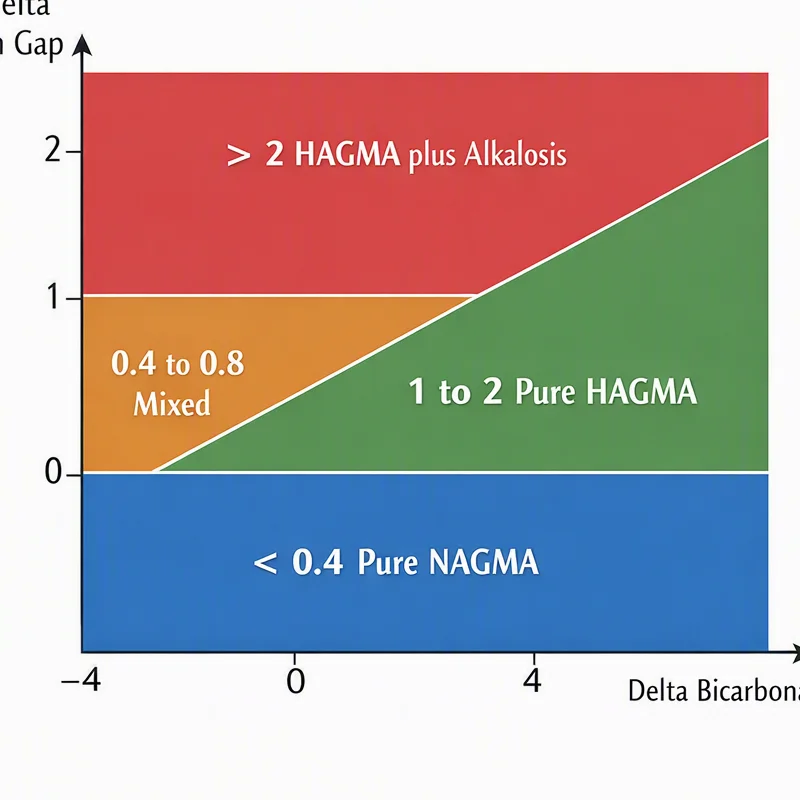
When the corrected value differs substantially from the raw result, it may indicate a mixed process. For example, a patient can have one disorder causing metabolic acidosis and another affecting bicarbonate or chloride levels. In these situations, the adjusted result is valuable because it helps uncover what the standard gap might obscure.
Typical causes of low albumin and elevated anion gap
Various conditions can cause both hypoalbuminemia and an elevated anion gap result. Identifying them can boost the odds of finding the true underlying cause rather than fixating only on the number. Common associated conditions include kidney disease, liver disease, malnutrition, and sepsis.
Kidney disease can cause acid retention and impaired clearance of acids, which may raise the anion gap. At the same time, chronic illness and protein loss may reduce albumin. This mix can make acid-base interpretation especially challenging without correction.
Liver disease may decrease albumin synthesis, leading to decreased serum albumin level and a deceptively low raw gap. If hepatic dysfunction is accompanied by metabolic derangement, the adjusted calculation becomes more informative.
Malnutrition can lower albumin production and often reflects broader systemic illness. In these patients, the electrolyte panel may not fully explain the acid-base status unless albumin is considered. A corrected value can help indicate whether the patient truly has an elevated acid burden.
Sepsis is another common setting where both low albumin and metabolic acidosis occur. Severe infection may increase lactate, while inflammation and capillary leak can reduce albumin. In this scenario, a standard anion gap may minimize the severity of the acid-base disturbance.
Other causes can also contribute, but these are among the most clinically relevant. In each case, the anion gap calculator serves best as part of a broader clinical assessment rather than as a stand-alone answer.
Limitations of the calculator
Although a well-designed anion gap calculator has limitations. One important issue is lab variability. Different laboratories may use varying assay methods, and those differences can affect the measured sodium, chloride, and bicarbonate values. Subtle discrepancies can change the result, particularly when the gap is borderline.
A second limitation is that the calculator depends on the quality of the input data. If the lab values are outdated, incomplete, or affected by sampling error, the output may confuse rather than clarify. A calculator cannot correct for suboptimal sampling technique or mismatched units.
There is also variability in how the ion gap is interpreted across institutions. Some reference ranges differ, and some calculators use a fixed albumin correction formula while others apply a somewhat different model. That means corrected values should always be compared against the local reference range and not treated as universal thresholds.
Above all, corrected values must be interpreted in clinical context. A number alone cannot determine the diagnosis. Symptoms, history, medications, perfusion status, kidney function, and the broader acid-base pattern all matter. The calculator improves the precision of acid-base interpretation, but it does not replace bedside reasoning.
Put simply, the tool is most effective when it supports a careful evaluation of laboratory measurements rather than functioning as an isolated diagnostic shortcut. The best use is as a guide to identify when the standard result may underestimate the real physiologic disturbance.
When is it time for clinical evaluation
Any abnormal finding involving critical values should prompt timely review by a clinician. This matters especially when the corrected anion gap is high, the bicarbonate is low, or there are signs of worsening acid-base disorders. A calculator can raise concern, but it cannot determine urgency by itself.
Arrange prompt evaluation if the patient has emergency symptoms such as severe shortness of breath, confusion, chest pain, fainting, persistent vomiting, or marked weakness. These can signal serious metabolic disturbances or other acute illness. In the setting of possible acid-base disorders, quick review may be necessary to find the cause and initiate treatment.
Medical evaluation is also important when the corrected value suggests hidden metabolic acidosis despite a seemingly normal raw gap. This can happen in low-albumin states and may be missed without albumin correction. In that situation, the anion gap calculator helps with early recognition of a problem that needs further workup.
If there is concern for lactic acidosis, ketoacidosis, kidney dysfunction, infection, or another serious underlying cause, the patient should not rely on a calculator alone. The result https://anion-gap-widget042.quantlynix.com/posts/can-lack-of-fluids-affect-the-anion-gap should be integrated into the broader clinical assessment and used to inform next steps in care.
Frequently asked questions
How do you adjust the anion gap for hypoalbuminemia?
To adjust the anion gap for hypoalbuminemia, first work out the standard value using the anion gap formula, then add a correction based on the serum albumin level. The goal is to account for the loss of albumin-related unmeasured anions, which can make the raw result look falsely low. Many calculators perform this albumin correction automatically.
Why does low albumin lower the anion gap?
Low albumin lowers the anion gap because albumin is a major negatively charged protein that contributes to unmeasured anions in the blood. When albumin falls, fewer negative charges remain to widen the gap, so the measured number drops even if the underlying acid-base balance is abnormal. That is why hypoalbuminemia can mask metabolic acidosis.
What’s a standard adjusted anion gap?
A normal corrected anion gap varies with the expected range used by the calculator. Generally, the corrected value should stay within the reference range after albumin has been considered. The main point is not the exact cutoff alone, but whether the result fits the broader assessment and clinical context.
Can a normal anion gap mask metabolic acidosis?
Yes. A normal anion gap can still conceal metabolic acidosis, especially when reduced albumin is present. Low albumin can lower the raw value and make a high anion gap metabolic acidosis appear normal. That is why corrected values are useful when acid-base interpretation is not clear.
When is it best for the corrected anion gap be used instead of the standard value?
The corrected anion gap should be used whenever serum albumin is low or when the clinical picture suggests that the raw value may be misleading. It is particularly helpful in kidney disease, liver disease, malnutrition, sepsis, or any systemic illness where albumin may distort the result. In these cases, the corrected value offers better diagnostic accuracy and a clearer interpretation guide.