How to Understand the Anion Gap?
The anion gap is a helpful way to assess the balance of charged particles in the blood. It is a calculated value that helps identify an acid-base problem, especially when there are undetected anions contributing to a metabolic abnormality. In simple terms, it relates the key measured cations and anions in serum chemistry, usually using sodium, chloride, and bicarbonate.
A standard formula is:
Anion gap = sodium - (chloride + bicarbonate)
This calculation is often derived from a basic metabolic panel. The result can help uncover underlying causes of acid-base imbalance, including high anion gap metabolic acidosis. When the anion gap is elevated, it often means there are extra acids in the bloodstream that are not directly measured in the standard lab panel.
The anion gap is not a diagnosis You can find out more by itself. It is a helpful clue that must be interpreted in the context of symptoms, the clinical assessment, and other lab data. Elements like albumin, electrolyte imbalance, and changes in chloride can all influence the result. Because albumin is one of the primary unmeasured anions, a low albumin level can make the anion gap appear lower than it really is.
How to Work with an Anion Gap Calculator
An Anion Gap Calculator is a useful tool for efficiently estimating the gap from everyday labs. You typically enter the values for sodium, chloride, and serum bicarbonate from the basic metabolic panel. The calculator then follows the standard formula and gives you a number that can aid lab interpretation.
To use the result well, it helps to look past the single number. A normal anion gap does not always rule out a serious problem, and an elevated anion gap does not tell you the exact cause. The calculator is most helpful when paired with clinical context, a symptom pattern, and a broader toxicology workup if poisoning is possible.
Albumin correction is especially important. Because albumin affects the measured balance of electrolytes, a low albumin level can hide an elevated anion gap. Correcting for albumin may reveal hidden acidosis and improve acid-base balance interpretation. In many cases, the corrected value provides a more precise picture of the underlying metabolic derangement.
Serum bicarbonate is a key input because it reflects the body’s buffering status. A low bicarbonate level often points toward metabolic acidosis, while a higher value may be seen in other settings. When the number is abnormal, it should lead to a search for the reason, not just the result.
Can Salicylates Raise the Anion Gap?
Indeed. Salicylates can raise the anion gap, particularly in salicylate toxicity. Aspirin is the most common salicylate, and overdose or repeated excess use can produce a characteristic toxicology picture. One major effect is high anion gap metabolic acidosis caused by the accumulation of unmeasured anions and organic acids.
Salicylates disrupt cellular metabolism, raise acid production, and disrupt normal respiratory and metabolic control. This creates a mixed acid-base disorder rather than a simple one. A person can have both respiratory alkalosis and metabolic acidosis at the same time, which is why salicylate poisoning is a typical mixed disorder.
The anion gap may increase because of multiple contributing factors, including lactate production and the presence of ketones. Salicylates can also hinder oxidative metabolism and drive a metabolic state where acids accumulate faster than the body can compensate. That is why the elevated anion gap is an key diagnostic clue when aspirin exposure or salicylates are suspected.
However, salicylate toxicity does not always present with the same lab pattern at every stage. Early on, the anion gap may be normal, notably before a major acid load builds up or before lab changes fully evolve. Later, as metabolic acidosis deepens, the gap is more likely to worsen.
Why Salicylate Poisoning Can Cause Mixed Acid-Base Disorders
Salicylate poisoning can drive a mixed disorder because it affects both breathing and metabolism. Early in toxicity, respiratory alkalosis is common because salicylates increase activity in the respiratory center, causing hyperventilation. This decreases carbon dioxide and can increase the blood pH initially.
At the same time, salicylates raise metabolic acid generation and interfere with normal energy use, leading to metabolic acidosis. That acidosis can be driven in part by lactate and ketones, especially when the body shifts into a strained, inefficient metabolic state. The result is a compensatory response that can look confusing on labs: an alkaline pH from hyperventilation, but a low bicarbonate level from acid accumulation.
This explains why salicylate toxicity is a textbook example of a combined disturbance. The patient may look like they have one problem on the blood gas analysis, yet the lab chemistry points to another. Detailed acid-base balance review is important, especially when the clinical picture includes toxin exposure or drug overdose symptoms.
Frequent Test Results in Salicylate Poisoning
Once salicylate poisoning is suspected clinically, the arterial blood gas is often one of the most helpful tests. It can show respiratory alkalosis, acidic metabolic changes, or a mixed acid-base picture depending on the point of illness. The pH may be elevated, normal, or acidic, so looking only at pH can fail to identify the diagnosis.
The bicarbonate level is usually low when metabolic acidosis is present. The serum salicylate level is also critical for toxicology assessment, but it should be interpreted alongside symptoms and acid-base findings rather than in isolation. A person with severe symptoms may need repeated testing because levels and clinical status do not always correspond perfectly at a single time point.
Other typical findings may include electrolyte abnormalities, changes in chloride, and evidence of respiratory compensation. The basic metabolic panel can show a low bicarbonate level and an increased anion gap, which strengthens the suspicion for salicylate poisoning. In severe cases, the lab pattern may suggest widespread metabolic derangement rather than a single isolated abnormality.
If the Anion Gap May Be Normal or Increased
In salicylate toxicity, the anion gap may be unchanged early and raised later. That variation depends on the timing, severity, and whether albumin is low enough to mask the true gap. Because albumin is an important unmeasured anion, hypoalbuminemia can make laboratory interpretation more difficult.
When albumin is low, an albumin correction should be considered so the anion gap is not falsely reassuring. This matters because the body may already be experiencing metabolic acidosis even if the uncorrected number looks slightly low. In other words, the normal anion gap is not always truly normal when albumin is reduced.
The key is to interpret the result as part of the overall clinical assessment. The presence of unmeasured anions, changes in bicarbonate, and the symptom pattern can all support the diagnosis. A calculator result is only one piece of the toxicology puzzle.
Alternate Sources of an Elevated Anion Gap to Rule Out
Not all elevated anion gap is caused by salicylates. A careful differential diagnosis is crucial because several serious conditions can produce a similar lab pattern. Common alternatives include lactic acidosis, ketoacidosis, renal failure, and toxic alcohols.
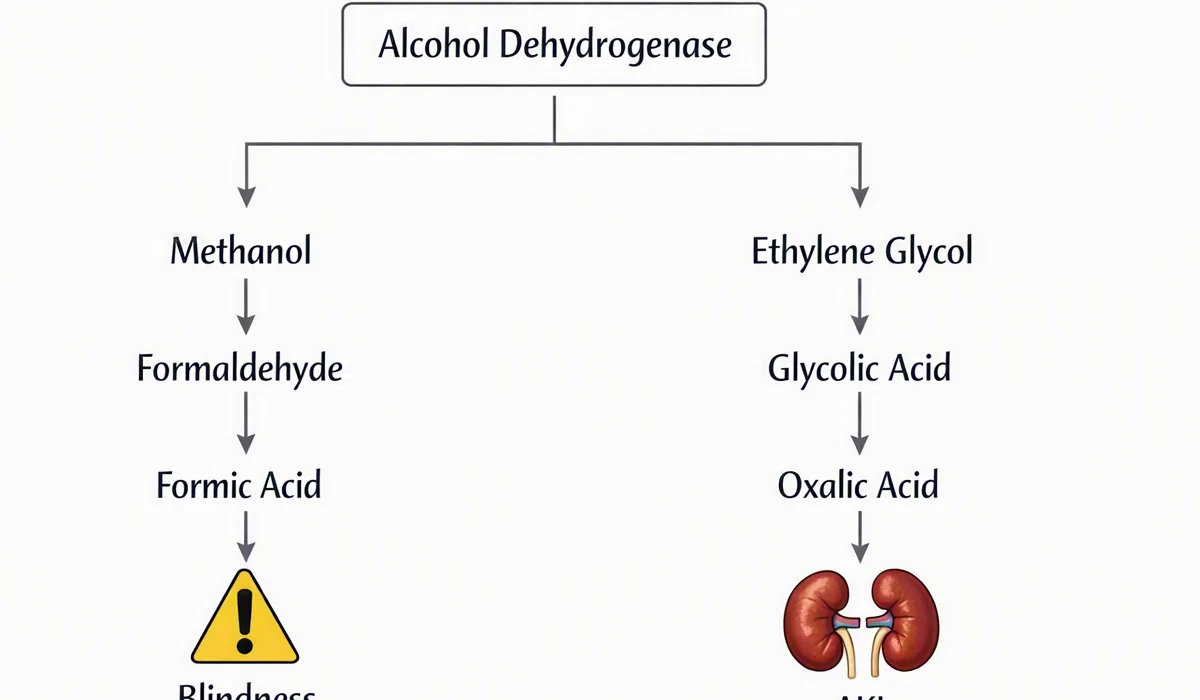
Lactic acidosis can occur with reduced tissue perfusion, severe infection, or different metabolic stress. Ketoacidosis may be seen in diabetes, starvation, or prolonged vomiting, and it often produces ketones that elevate the gap. Renal failure can cause acid retention because the kidneys cannot eliminate acids effectively. Toxic alcohols are an additional major concern because they can create serious acid-base abnormalities and require urgent treatment.
This is why lab interpretation must go beyond a single Anion Gap Calculator value. The result should be matched with the history, symptoms, serum chemistry, and, when needed, additional toxicology tests. The pattern of acid-base disorder can help limit the cause, but it seldom tells the whole story by itself.
When to Seek Prompt Healthcare Evaluation
Prompt medical assessment is essential if salicylate toxicity is suspected, especially when overdose signs are present. Warning signs can include tinnitus, hyperventilation, vomiting, confusion, fever, or rapid worsening of the person’s condition. Tinnitus is a classic symptom and should not be ignored when aspirin or other salicylates are involved.
Because salicylate poisoning can advance fast, poison control should be contacted immediately if an overdose is suspected. This is especially important if the person is breathing rapidly, has an altered mental status, or shows signs of metabolic acidosis. Initial treatment decisions depend on the clinical picture, not just the lab number.
If a person has taken too much aspirin or another salicylate product, do not wait for the symptoms to worsen. Prompt evaluation can help confirm the diagnosis, measure the serum salicylate level, and evaluate acid-base balance before the situation becomes more severe.
FAQ
Will salicylates consistently increase the anion gap?
Not always. Salicylates may not always increase the anion gap at first. At the start of salicylate toxicity, the gap may still be normal, notably before significant metabolic acidosis develops or if albumin is low enough to mask the rise. Over time, however, salicylates frequently lead to an elevated anion gap because of accumulating unmeasured anions and acid generation.
Does aspirin toxicity cause both respiratory alkalosis and metabolic acidosis?
Absolutely. Aspirin toxicity is a classic cause of a mixed disorder with both respiratory alkalosis and metabolic acidosis. Salicylates stimulate breathing, which lowers carbon dioxide, while also driving acid accumulation that lowers bicarbonate. That combination can make the arterial blood gas and serum chemistry look conflicting unless they are interpreted together.
What anion gap result is concerning for salicylate poisoning?
There is not one exact threshold that proves salicylate poisoning, but an elevated anion gap with low bicarbonate and compatible symptoms should raise concern. The exact number matters less than the pattern and the clinical context. If the patient has hyperventilation, tinnitus, or other overdose symptoms, further toxicology evaluation is warranted even if the gap is only mildly abnormal.
Should albumin be corrected when interpreting the anion gap?
Yes, it should. Albumin correction is often important because low albumin can make the anion gap appear falsely normal or less abnormal than it really is. Since albumin is a major unmeasured anion, correcting for it improves clinical interpretation and helps identify hidden metabolic acidosis. This is especially useful when the basic metabolic panel seems inconsistent with the patient’s symptoms.
Which other conditions can look similar to salicylate toxicity on labs?
A number of disorders can resemble salicylate toxicity on labs, including lactic acidosis, ketoacidosis, renal failure, and toxic alcohols. Each can produce an elevated anion gap and metabolic acidosis, so the diagnosis depends on the overall symptom pattern, history, and additional testing. An arterial blood gas, serum salicylate level, and careful acid-base balance review help separate these possibilities.